
Introduction
Prostate cancer is considered one of the leading cancers among men around the world. It originates in the prostate gland, a vital element of the human sexual reproductive system. Prostate cancer management solutions are difficult and are based on various parameters, such as the prostate cancer stage, tumor invasiveness, overall health of the individual, and personal interests. Thus, a range of treatment alternatives for prostate cancer, involving surgery, radiation therapy, medications, and watchful waiting, needs to be used.
Surgical Intervention
Surgical treatment, in particular radical prostatectomy, provides for the total excision of the whole prostate organ together with the tissues surrounding it. This surgery is typically recommended for patients with advanced prostate disease, particularly when the cancer is localized to the brain and has not extended to other organs (Achard et al., 2022). Radical prostatectomy can be performed using various types of surgical access, such as an open operation. During open surgery, a short incision is placed in the lower part of the abdomen to gain access to the entire prostate gland (Achard et al., 2022). This traditional method provides direct imaging of the surgical procedure but can result in longer recovery times and greater blood loss than non-invasive techniques.
Additionally, laparoscopic prostatectomy is a minimally invasive procedure where incisions are made in the abdomen, and specific surgical devices and a camera are introduced to allow for the excision of the enlarged prostate gland. This approach results in less pressure, shorter recovery time, and faster treatment than open surgery (Achard et al., 2022). Robotic surgery uses robotic technology to help the surgical team perform the procedure with greater precision and skill. The surgeon guides the robotic hands from a console, handling miniature instruments to perform prostate removal through small openings (Achard et al., 2022). Robotic surgery promises better visualization, greater mobility in tight spaces, and possibly better cancer control and recovery.
Radiotherapy
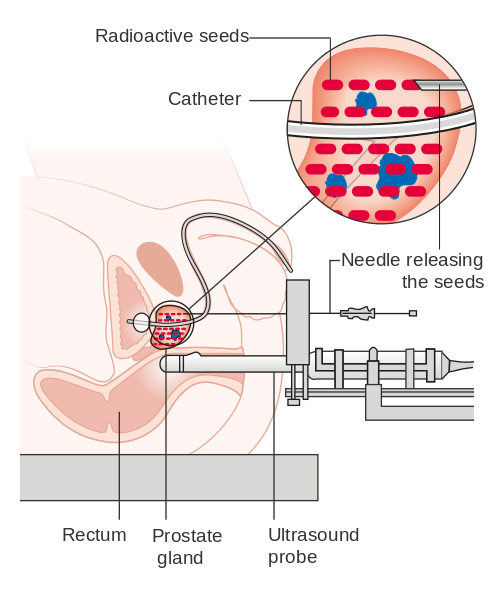
Radiation therapy involves the deployment of high-energy radiation to aim and destroy cancer cells. It is a widespread treatment option for both limited and spread prostate cancer. External Beam Radiation Therapy (EBRT) is a minimally invasive therapy that delivers high-energy radiation from outside the body to target prostate cancer cells (Blue Ridge Radiation Oncology, n.d.).
The radiation is precisely targeted to the tumor, avoiding the adjacent healthy skin. EBRT is typically administered in several treatment sessions o of several weeks, delivering a graded, dual cumulative dose of irradiation to the target area while avoiding normal tissue injury (Blue Ridge Radiation Oncolon.d. n.d). This is a suitable option for people with localized prostate disease who may not be suitable candidates for cancer surgery or who prefer an unconventional treatment method.
Intensity-modulated radiation therapy (IMRT) is an innovative form of EBRT that employs highly controlled computer-guided treatment sessions to deliver accurate radiation doses to the entire bladder while minimizing the exposure of nearby organs such as the prostate and rectum. By controlling the intensity and focus of the radioactive beams, IMRT delivers more targeted therapy and reduces damage to surrounding tissues (Blue Ridge Radiation Oncology, n.d.). This method is most beneficial for patients with specialized prostate disease who are exposed to higher levels of radiation or who have tumors situated near critical organs.
Image-guided radiation therapy (IGRT) integrates radiation treatment with real-time imaging modalities, such as clinical computed tomography (CT) or magnetic resonance imaging (MRI), to pinpoint the prostate gland’s location and control its posture during treatment. By accurately matching the treatment beams to the tumor’s exact location, IGRT reduces the risk of injury to surrounding healthy structures and enhances treatment success (Blue Ridge Radiation Oncology, n.d.). This technique is particularly beneficial for patients with advanced prostate cancer who have received previous operations or have multiple tumors situated in complicated anatomical areas.
Medications
Drugs play a critical part in prostate cancer treatment, specifically in cases where the cancer has extended beyond the confines of the prostate gland. Hormone therapy, also referred to as androgen deprivation therapy (ADT), is usually used to reduce the growth of prostate cancer by decreasing the amount of male reproductive hormones (androgens) in the prostate. This can be realized with medicines such as luteinizing hormone-releasing hormone (LHRH) receptor blocking hormone (LHRH) agonists or antagonists, which inhibit the production of male testosterone (Yamada & Beltran, 2021). Other medications, like anti-androgens and corticosteroids, may also be administered to augment hormone medication or to address side symptoms.
Chemotherapy is still another option for treating prostate cancer, usually prescribed for progressed or metastatic prostate cancer that has grown refractory to adjuvant therapy. Chemotherapy medicines work by targeting rapidly dividing cancer cells throughout the body, helping reduce tumors and slow tumor growth (Yamada & Beltran, 2021). While chemotherapy can be successful in prolonging survival, it often has significant side effects, such as increased nausea, weakness, and tiredness, and an enhanced risk of complications.
Additionally, immunotherapy and tailored therapies are new treatments for advanced prostate cancer that seek to harness the body’s immune response or target certain molecular signaling pathways implicated in cancer progression (Yamada & Beltran, 2021). These methods show promise for improving outcomes and prolonging patient survival for patients with spread prostate cancer, particularly those who have experienced conventional treatment that has previously failed.
Watchful Waiting
Watchful waiting is generally indicated for patients with low-risk or early-stage prostate cancer. The reason is that favorable tumor features, such as a low Gleason score, small tumor volume, and a low PSA score, characterize it. These individuals have a low chance of cancer development or metastasis and may not receive considerable benefit from urgent treatment options such as surgery or X-ray therapy (Yamada & Beltran, 2021). By identifying appropriate waiting list candidates using established risk stratification criteria, healthcare service providers can maximize clinical outcomes and reduce the risk of excessive medication.
Patients who are on the waiting list are monitored closely with regular exams and screening tests to follow the progress of the cancer and identify any indications of disease extension. A key component of the monitoring protocol might include performing prostate-specific antigen (PSA) tests at frequent intervals to assess circulating PSA levels, which can provide an estimate of the presence and activity of any prostate-specific cancer cells.
Trends in PSA values over time, called PSA kinetics, are closely followed to estimate the stability or advancement of the condition (Yamada & Beltran, 2021). A digital rectal examination (DRE) is performed periodically to assess the size, consistency, and mobility of the prostate and to identify any detectable anomalies or changes suggestive of tumor progression (Yamada & Beltran, 2021). Although DREs may not be as specific as PSA tests for identifying early-stage prostate cancer, they provide important clinical insights and supplement other surveillance activities.
Conclusion
In summary, prostate cancer care is highly customizable, with a variety of options available according to the stage and severity of the condition, and the patient’s overall medical condition and benefits. Surgery, radiation therapy, medications, and watchful waiting are key therapies used alone or in conjunction to manage prostate cancer successfully. Due to advances in medical technology and ongoing research initiatives, the landscape of prostate cancer care continues to evolve.
References
Achard, V., Putora, P. M., Omlin, A., Zilli, T., & Fischer, S. (2022). Metastatic prostate cancer: treatment options. Oncology, 100(1), 48-59.
Blue Ridge Radiation Oncology. (n.d.). Radiation therapy for prostate cancer.
Yamada, Y., & Beltran, H. (2021). The treatment landscape of metastatic prostate cancer. Cancer Letters, 519, 20-29.
