
Introduction
Dashboard metrics play a crucial role in healthcare facilities by providing actionable insights into operations, patient care, and financial performance. They provide real-time or near-real-time visibility into key metrics, enabling healthcare administrators and managers to monitor performance, identify issues and trends that require attention, and facilitate proactive decision-making and problem-solving. In the current dynamic environment, data-driven decision-making can be more effective by using reliable data points to support evidence-based decision-making at all levels of the organization, from strategic planning to day-to-day operations.
Metrics Evaluation
Mercy Medical Center has reported data showing a decline in performance regarding HgbA1c tests. At the same time, there have also been some dramatic fluctuations in the number of eye and foot exams among diabetic patients. For patients with diabetes, achieving and maintaining target HgbA1c levels is a key goal of disease management. Regular monitoring of HgbA1c levels enables healthcare providers to assess the effectiveness of treatment plans, including medication regimens, lifestyle modifications, and dietary changes. Moreover, Elevated HgbA1c levels are associated with an increased risk of diabetes-related complications, such as cardiovascular disease, nephropathy, neuropathy, and retinopathy.
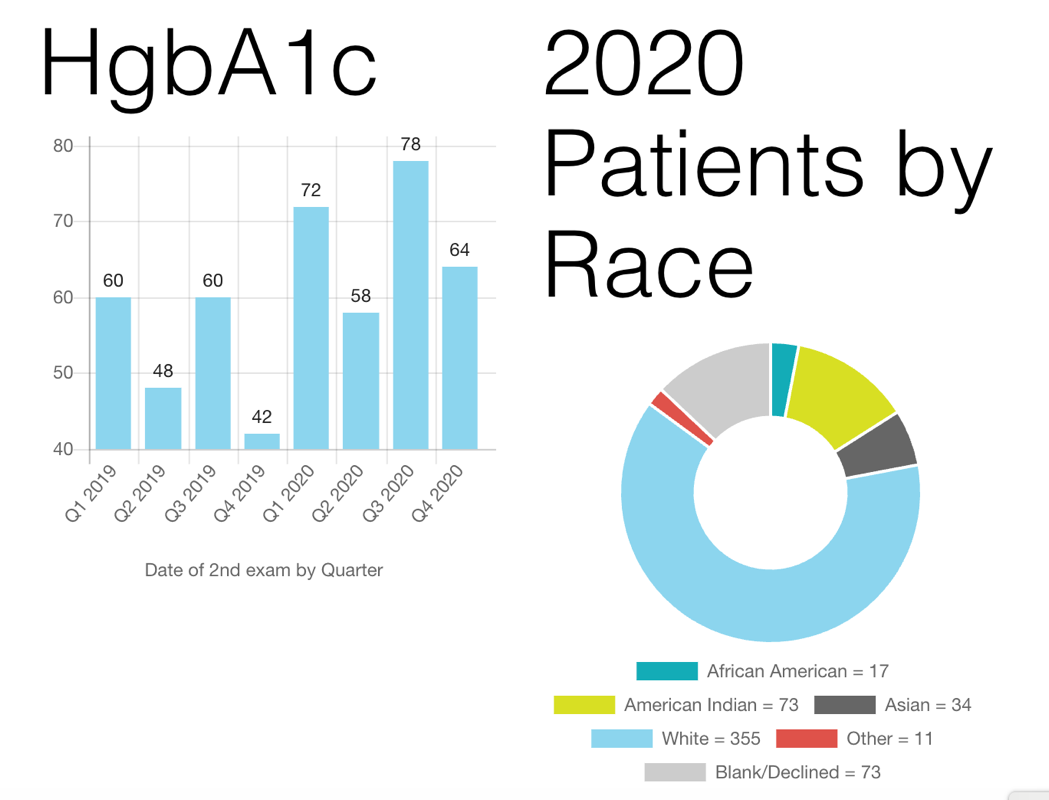
Among the target patient population, both eye and foot screenings are of great importance due to the increased risk of developing diabetes-related complications affecting these areas. Foot screenings assess the risk factors for developing foot problems, such as neuropathy, poor circulation, foot deformities, and foot ulcers. Moreover, diabetic retinopathy is a common complication of diabetes and a leading cause of vision loss among adults. Regular eye screenings, such as dilated eye exams, can detect diabetic retinopathy in its early stages when treatment is most effective. Timely intervention, including laser therapy or medication injections, can help prevent or slow the progression of diabetic retinopathy and reduce the risk of severe vision impairment or blindness.
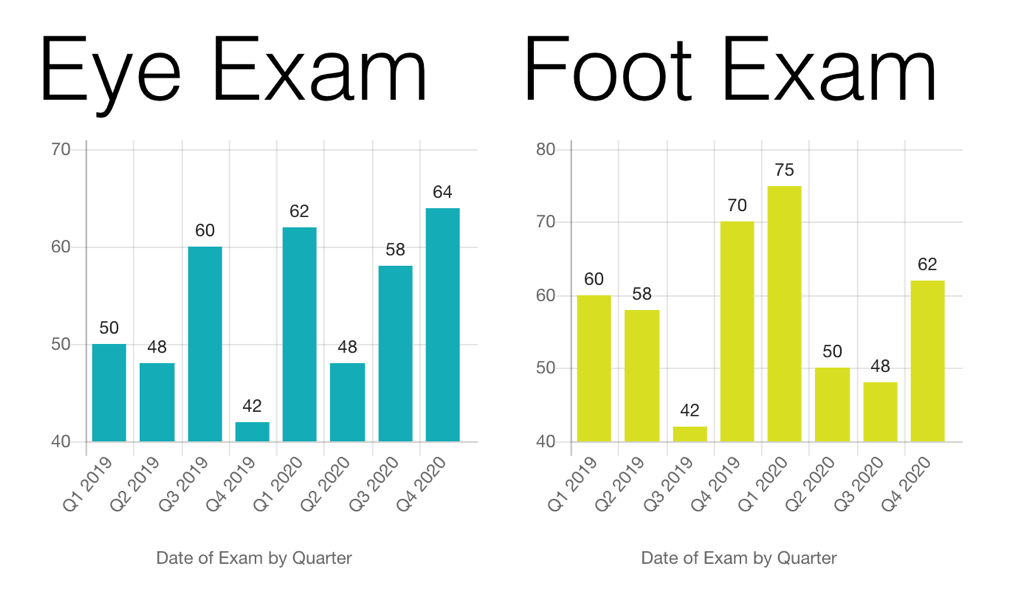
If one compares the three areas of assessment with the state and national benchmarks, it becomes clear that the staff at Mercy Medical Center has been unable to meet the national and state outcomes. It must be noted that the center’s dashboards do not display percentages, which makes it impossible to assume that the highest number represents the total number of diabetes patients. This is an unknown area that requires further clarification to make the analysis more precise. A clarification in this area of uncertainty could have improved the evaluation, and, for now, the percentages in patient screenings are estimates rather than precise.
According to the 2020 patient dashboard by gender, there were 563 patients at the facility. Quarterly, the highest number of examinations was 78 (HgbA1c), suggesting that, on average, around 100-120 patients were at the facility. The national benchmark for HgbA1c tests is 79.5%, while the lowest indicator was 42 patients in Q4 2019 (around 42%, assuming 100 patients). In Minnesota, the benchmark is 78%, indicating that HgbA1c testing at the facility fell below both state and national benchmarks (AHRQ, 2020). If a healthcare facility falls below both state and national benchmarks for HgbA1c levels, it may indicate challenges in effectively managing blood glucose control in diabetic patients.
For eye and foot exams, a significant decline was observed in Q3 2019 and Q4 2019. At the facility, the lowest percentage of foot examinations was 42%, compared to the national benchmark of 84% and the Minnesota benchmark of 84.1%. The same percentage of eye examinations occurred at the facility, while the state benchmark is 71% and the nationwide benchmark is 70.3% (OASH, 2023; MNCM, 2019).
Based on the evaluation, one can conclude that the facility’s underperformance on the mentioned benchmarks is likely due to insufficient resources to meet the national and statewide benchmarks for important screening tests for diabetic patients. Even though Mercy Medical Center is among the top facilities in Minnesota, staff still face persistent challenges in meeting the benchmark objectives for relevant screening types.
Consequences
Failing to meet benchmarks may undermine the organization’s mission and vision, particularly if the benchmarks are aligned with goals related to quality of care, patient satisfaction, or population health outcomes. This can lead to a disconnect between organizational aspirations and actual performance, eroding staff morale and commitment. Moreover, inadequate resources, such as funding, staffing, equipment, and infrastructure, can hinder the organization’s ability to meet prescribed benchmarks and limit the success of quality improvement initiatives, preventive care programs, or technology upgrades.
Staffing shortages or turnover can affect the organization’s capacity to deliver timely, effective care, leading to delays in screenings, inconsistent follow-up, and gaps in care coordination. The significant decline at the end of 2019 and the beginning of 2020 suggests that the facility’s staff were likely overburdened by the workload at the start of the pandemic. High workload and staffing shortages may also contribute to burnout and dissatisfaction among healthcare providers, affecting morale and productivity. It must be mentioned that staff training and competency in diabetes screening protocols and best practices are essential for ensuring accurate and effective screenings. Inadequate training or skills gaps among healthcare providers may result in inconsistent adherence to screening guidelines, misinterpretation of test results, or missed opportunities for early detection and intervention.
Improvement Potential
One benchmark underperformance that has the potential to greatly improve overall quality and performance in a healthcare organization or inter-professional team is the timely completion of diabetic foot exams for diabetic patients. The exam is quite easy to perform within a short timeframe, and with standardized protocols available, staff can increase the rate and consistency of exams within the given healthcare setting. For instance, the facility may use EHR systems or clinical decision support tools to prompt healthcare providers to conduct foot examinations during patient encounters. Automated reminders and alerts can help ensure that foot examinations are performed routinely and documented consistently.
Finally, advocating for ethical and sustainable actions to address benchmark underperformance in diabetic foot examinations requires consideration of an appropriate group of stakeholders, including providers, administrators, professional associations, patients, and advocacy groups. The reasons for stakeholder actions range from patient well-being to enhanced organizational reputation. Ethical actions to support improved benchmark performance include standardized protocols, training, education, and patient improvement. Moreover, interdisciplinary collaboration is crucial for coordinating care and optimizing diabetic foot examinations.
Conclusion
To conclude, the current evaluation offered a comprehensive overview of the issues that prevent a healthcare facility from meeting national and statewide benchmarks in diabetes care. However, challenges such as inadequate staffing, limited resources for patient education and self-management support, and cultural barriers to care may contribute to underperformance in this area. By addressing the root causes of underperformance and implementing targeted interventions, healthcare organizations and inter-professional teams can reduce the burden of diabetes-related complications, improve patient outcomes, and optimize the delivery of comprehensive diabetic care.
References
AHRQ. (2020). National healthcare quality and disparities reports (NHQDR).
Capella University. (2024). Public health dashboard – Diabetes.
MNCM. (2019). 2018 Minnesota health care quality report: Released February 2019.
OASH. (2023). Increase the proportion of adults with diabetes who have a yearly eye exam — D‑04.
